 CFA Society Of Toronto - Home Page





The Changing World Order: Why Nations Succeed and Fail
Ray Dalio
Simon & Schuster
August 2021, $39.99
A few years ago, renowned investor Ray Dalio began noticing a confluence of political and economic conditions he hadn’t encountered before in his 50-year career. These included large debts and zero or nearzero interest rates in the world’s three major reserve currencies; significant wealth, political, and values divisions within countries; and emerging conflict between a rising world power (China) and the existing one (U.S.). Seeking to explain the cause-and-effect relationships behind these conditions, he began a study of analogous historical times and discovered that such combinations of conditions are characteristic of periods of transition, such as the years between 1930 and 1945, in which wealth and power shifted in ways that reshaped the world order. Looking back across 500 years of history and nine major empires, including the Dutch, the British, and the American, The Changing World Order puts into perspective the cycles and forces that have driven the successes and failures of the world’s major countries throughout history. Dalio reveals the timeless and universal dynamics that were behind these shifts, while also offering practical principles for policymakers, business leaders, investors, and others operating in this environment.
The Mushroom at the End of the World: On the Possibility of Life in Capitalist Ruins
Anna Lowenhaupt Tsing
Princeton University Press
September 2017 (April 2021 paperback), $25.50
Matsutake is the most valuable mushroom in the world—and a weed that grows in human-disturbed forests across the northern hemisphere. Through its ability to nurture trees, matsutake helps forests to grow in daunting places. It is also an edible delicacy in Japan, where it sometimes commands astronomical prices. In all its contradictions, matsutake offers insights into areas far beyond just mushrooms and addresses a crucial question: what manages to live in the ruins we have made?
A tale of diversity within our damaged landscapes, The Mushroom at the End of the World follows one of the strangest commodity chains of our times to explore the unexpected corners of capitalism. Here, we witness the varied and peculiar worlds of matsutake commerce: the worlds of Japanese gourmets, capitalist traders, Hmong jungle fighters, industrial forests, Yi Chinese goat herders, Finnish nature guides, and more. These companions also lead us into fungal ecologies and forest histories to better understand the promise of cohabitation in a time of massive human destruction.
By investigating one of the world’s most sought-after fungi, The Mushroom at the End of the World presents an original examination into the relation between capitalist destruction and collaborative survival within multispecies landscapes, the prerequisite for continuing life on earth.
Good Economics for Hard Times: Better Answers to Our Biggest Problems
Abhijit V. Banerjee and Esther Duflo
PublicAffairs
November 2019 (August 2021 paperback), $23.99
Figuring out how to deal with today’s critical economic problems is perhaps the great challenge of our time. Much greater than space travel or perhaps even the next revolutionary medical breakthrough, what is at stake is the whole idea of the good life as we have known it.
Immigration and inequality, globalization and technological disruption, slowing growth and accelerating climate change—these are sources of great anxiety across the world, from New Delhi and Dakar to Paris and Washington, DC. The resources to address these challenges are there—what we lack are ideas that will help us jump the wall of disagreement and distrust that divides us. If we succeed, history will remember our era with gratitude; if we fail, the potential losses are incalculable.
In this revolutionary book, renowned MIT economists Abhijit V. Banerjee and Esther Duflo take on this challenge, building on cutting-edge research in economics that is explained with lucidity and grace. Original, provocative, and urgent, Good Economics for Hard Times makes a persuasive case for an intelligent interventionism and a society built on compassion and respect. It is an extraordinary achievement, one that shines a light to help us appreciate and understand our precariously balanced world.
The Power of Nothing to Lose: The Hail Mary Effect in Politics, War, and Business
William L. Silber
HarperCollins
August 2021, $35.99
In The Power of Nothing to Lose, award-winning economist William Silber explores the phenomenon in politics, war, and business in which situations with a big upside and a limited downside trigger gambling behaviour known as a “Hail Mary.” Silber describes in colourful detail how the American Revolution turned on such a gamble. The famous scene of Washington crossing the Delaware on Christmas night to attack the enemy may not look like a Hail Mary, Silber argues, but it was. Washington said days before his risky decision, “If this fails, I think the game will be pretty well up.” In another example, Rosa Parks remained seated in the white section of an Alabama bus, defying local segregation laws in an act that sparked the modern civil rights movement in America. It was a life-threatening decision, but she said, “I was not frightened. I just made up my mind that as long as we accepted that kind of treatment, it would continue, so I had nothing to lose.” Silber shares these illuminating insights on these figures and more. Collectively, they illustrate that downside protection fosters risky undertakings and changes the world in ways we least expect.
Dangerous Opportunities: The Future of Financial Institutions, Housing Policy, and Governance
Stephanie Ben-Ishai
University of Toronto Press
September 2021, $34.95
The Home Capital crisis is the most recent pre-pandemic example of systemic risk in the financial sector in Canada and highlights the invaluable opportunity we have to avoid past mistakes in the nearing post-pandemic economic reality.
Using the 2017 Home Capital saga as a starting point, Dangerous Opportunities sheds light on the compartmentalization of regulators and its greater ramifications for board independence and corporate governance, taxation in the competitive house context, and non-bank financial institutions’ success in various jurisdictions. A hybrid of law and business, Dangerous Opportunities is a must read for those interested in the underbelly of financial institutions, and an inspired read in the aftermath of the recent housing crisis that saw many aspiring homeowners seeking dangerous opportunities outside of the traditional banking system.
Why Trust Matters: An Economist’s Guide to the Ties That Binds Us
Benjamin Ho
Columbia University Press
June 2021, $46.00
Have economists neglected trust? The economy is fundamentally a network of relationships built on mutual expectations. More than that, trust is the glue that holds civilization together. Every time we interact with another person—to make a purchase, work on a project, or share a living space—we rely on trust. Institutions and relationships function because people place confidence in them. Retailers seek to become trusted brands, employers put their trust in their employees, and democracy only works when we trust our government.
In Why Trust Matters, Benjamin Ho reveals the surprising importance of trust to how we understand our day-to-day economic lives. Starting with the earliest societies and proceeding through the evolution of the modern economy, he explores its role across an astonishing range of institutions and practices. From contracts and banking to blockchain and the sharing economy to health care and climate change, Ho shows how trust shapes the workings of the world. He provides an accessible account of how economists have applied the mathematical tools of game theory and the experimental methods of behavioural economics to bring rigour to understanding trust. Bringing together insights from decades of research in an approachable format, Why Trust Matters shows how a concept that we rarely associate with the discipline of economics is central to the social systems that govern our lives.
The Money Illusion: Market Monetarism, the Great Recession, and the Future of Monetary Policy
Scott Sumner
University of Chicago Press
July 2021, $45.50
Is it possible that the consensus around what caused the 2008 Great Recession is almost entirely wrong? It’s happened before. Just as Milton Friedman and Anna Schwartz led the economics community in the 1960s to re-evaluate its view of what caused the Great Depression, the same may be happening now to our understanding of the first economic crisis of this century.
Foregoing the usual relitigating of the problems of housing markets and banking crises, renowned monetary economist Scott Sumner argues that the Great Recession came down to one thing: nominal GDP (the sum of all nominal spending in the economy), which the Federal Reserve mistakenly allowed to plummet. The Money Illusion is an end-to-end case for this school of thought, known as market monetarism, written by its leading voice in economics. Based almost entirely on standard macroeconomic concepts, this highly accessible text lays the groundwork for a simple—yet fundamentally radical—understanding of how monetary policy can work best to provide a stable environment for a market economy to flourish.
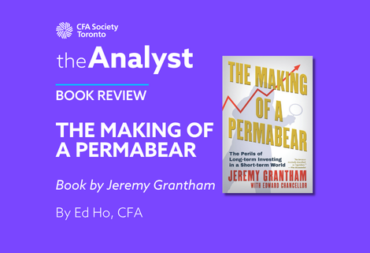 The Making of a Permabear by Jeremy Grantham Books to help you step into spring BOOKS TO BRING YOU INTO A NEW YEAR