 CFA Society Of Toronto - Home Page




Competing in the New World of Work: How Radical Adaptability Separates the Best from the Rest
Keith Ferrazzi, Kian Gohar, and Noel Weyrich
Harvard Business Review Press
February 2022, $40.00
You’ve shed antiquated systems and processes. You went all-in on digital. Your teams settled into new, often better, ways of doing things. But did your organization change enough to stay competitive in the post-pandemic world? Did you fully leverage the once-in-a-lifetime opportunity to leap forward and grow stronger? Are you shaping the new environment to your advantage?
Keith Ferrazzi, along with coauthors Kian Gohar and Noel Weyrich, show leaders how to shape their organizations and practices to remain competitive in a new, post-pandemic context. Based on an ambitious global research initiative involving thousands of executives, innovators, and changemakers who redefined their strategies, business models, organizational systems, and even their cultures, Competing in the New World of Work:
- Offers a bold new vision for the organization of the future
- Reveals the workplace innovations that emerged during the pandemic
- Defines the new model of leadership—radical adaptability—for sustaining continuous change throughout the coming years of opportunity and transformation
All Are Welcome: How to Build a Real Workplace Culture of Inclusion That Delivers Results
Cynthia Owyoung
McGraw Hill
February 2022, $35.95
Studies continually show that companies with more diversity in their ranks are more innovative, serve expanded marketplaces, and perform better financially; however, most companies have yet to develop and implement effective diversity, equity, and inclusion initiatives—and pressure to succeed is rapidly increasing. All Are Welcome takes you beyond the mere practice of hiring a diversity of staff to make inclusion part of the equation, too. Cynthia Owyoung argues that a strong practice of inclusion is necessary for employee retention. Pressure to make diversity, equity, and inclusion an organizational priority—on par with the pursuit of profits and growth—is greater today than ever.
All Are Welcome provides the knowledge, insights, and tools you need to make diversity, equity, and inclusion integral parts of your organizational strategy. Learn how to make diversity efforts stick and cultivate an organization that outperforms its peers.
How to Talk to Your Boss About Race: Speaking Up Without Getting Shut Down
Y-Vonne Hutchinson
Portfolio
February 2022, $34.00
Diversity and inclusion strategist Y-Vonne Hutchinson helps tech giants, political leaders, and Fortune 500 companies speak more productively about racism and bias and turn talk into action. In this clear and accessible guide, Hutchinson equips employees with a framework to think about race at work, prepares them to have frank and effective conversations with more powerful leaders, helps them centre marginalized perspectives, and explains how to leverage power dynamics to get results while navigating backlash and gaslighting.
Alphabet Soup: The Essential Guide to LGBTQ2+ Inclusion at Work
Michael Bach
Page Two Books
March 2022, $21.00
In this myth-busting follow-up to Birds of All Feathers, diversity and inclusion expert Michael Bach breaks down everything you need to know about creating inclusive workplaces for people who don’t fit squarely into the “straight” and “cis” box. And don’t worry if you’re already feeling lost; by the time you’ve finished this book, you’ll know exactly LGBTQ2+ means—and a whole lot of other stuff to boot.
With clarity and a healthy dose of humour, Bach lays out a road map of how to ensure your workplace is safe for LGBTQ2+ people. You’ll gain a clear understanding of sexuality, gender identity, and gender expression (yes, they’re different things, and it matters); what a safe space is and how to turn your workplace into one; and how to create and properly enforce a workplace code of conduct.
Alphabet Soup is a critical guide to creating a truly inclusive workplace for all—regardless of sexuality, gender identity, or gender expression. Whether you consider yourself an ally or don’t even know what it means to be one, you’ll come away armed with everything you need to know to create a safe, productive, and thriving organization.
The Elephant and the Mouse: Moving Beyond the Illusion of Inclusion to Create a Truly Diverse and Equitable Workplace
Laura A. Liswood
Wiley
March 2022, $25.99
The Elephant and the Mouse refers to a dynamic in organizations that is a roadblock to consciously inclusive success. The Elephant, which refers to dominant group leadership, knows little about the experiences of the Mouse, the non-dominant groups, while the Mouse knows so much more about the Elephant. In diverse workplaces, these two groups live in different worlds. Success is possible only if everyone works within a true meritocracy. You learn that what may be easy for some to do in their careers is much harder for others to do.
A resource for managers, executives, and other business leaders who seek to create truly diverse, inclusive, and equitable organizations, The Elephant and the Mouse is also a must-read for human resources professionals, individuals who want successful careers in diverse teams, and anyone involved in hiring, retaining, and promoting processes. This book offers a way to move beyond traditional diversity efforts towards more modern practices that embrace—and profit from—the differences between people.
Bitcoin Widow: Love, Betrayal and the Missing Millions
Jennifer Robertson and Stephen Kimber
HarperCollins
January 2022, $24.99
Jennifer Robertson was working hard to build a life for herself from the ashes of her first marriage. Still only 26, she swiped right on a dating app and met Gerry Cotten, a man she would not normally have considered—too young and not her type—but found she’d met her match. Eccentric but funny and kind, Cotten turned out to be a bitcoin wizard who quickly amassed substantial wealth through his company, Quadriga. The couple travelled the world, first class all the way, while Cotten worked on his multitude of encrypted laptops. Then, while the couple was on their honeymoon in India, opening an orphanage in their name, Gerry fell ill and died in a matter of hours. Jennifer was consumed by grief and guilt, but that was only the beginning. It turned out that Gerry owed $250 million to Quadriga customers, and all the passwords to his encrypted virtual vaults, hidden on his many laptops, had died with him. Jennifer was left with more than one hundred thousand investors looking for their money, with questions, suspicions, and accusations spiralling dangerously out of control.
Bitcoin Widow is Catch Me if You Can meets a widow betrayed, a life of fairy-tale romance and private jets torched by duplicity, as Jennifer Robertson tries to reset her life in the wake of one of the biggest investment scandals of the digital age.
Searching for Trust in the Global Economy
Jeanne Brett and Tyree Mitchell
Rotman-UTP Publishing
April 2022, $32.95
Trust is the foundation for strong working relationships, but the way people from different cultures search for and decide to trust varies. Searching for Trust in the Global Economy describes these cultural differences from the perspective of 82 managers from 33 different national cultures in four regions of the world. It addresses the current global business climate with insights from managers who describe how the COVID-19 pandemic disrupted the process of searching for and deciding to trust new business partners.
Jeanne M. Brett and Tyree D. Mitchell propose a simple but general framework that outlines the cultural differences in deciding to trust new business partners. They suggest that the key to understanding cultural differences in this process lies in the interplay between cultural levels of trust and “tightness–looseness,” or the degree to which a culture strongly enforces its norms. They explain how searching for and deciding to trust is different in the high trust, loose cultures in the West; the high trust, tight cultures in East Asia; the low trust, tight cultures in the Middle East and South Asia; and the low trust, loose cultures in Latin America.
Searching for Trust in the Global Economy is based on managers’ experiences building new business relationships around the world, but its practical advice around searching for and deciding to trust is useful not only for business leaders, but also for government, not-for-profit, and other leaders who are responsible for building new relationships in the global economy.
The Revolution That Wasn’t: GameStop, Reddit, and the Fleecing of Small Investors
Spencer Jakab
Portfolio
February 2022, $37.99
During one crazy week in January 2021, a motley crew of retail traders on Reddit’s r/wallstreetbets forum had seemingly done the impossible—they had brought some of the biggest, richest players on Wall Street to their knees. Their weapon was GameStop, a failing retailer whose shares briefly became the most-traded security on the planet and the subject of intense media coverage.
The Revolution That Wasn’t is the riveting story of how the meme stock squeeze unfolded and of the real architects (and winners) of the GameStop rally. Drawing on his years as a stock analyst at a major bank, Spencer Jakab exposes technological and financial innovations, such as Robinhood’s habit-forming smartphone app, as ploys to get our dollars within the larger story of evolving social and economic pressures. The surprising truth? What appeared to be a watershed moment—a revolution that stripped the ultra-powerful hedge funds of their market influence, placing power back in the hands of everyday investors—only tilted the odds further in the house’s favour.
The Power Law: Venture Capital and the Making of the New Future
Sebastian Mallaby
Penguin Press
February 2022, $40.00
In The Power Law, Sebastian Mallaby has parlayed unprecedented access to the most celebrated venture capitalists (VCs) of all time—the key figures at Sequoia, Kleiner Perkins, Accel, Benchmark, and Andreessen Horowitz, as well as Chinese partnerships such as Qiming and Capital Today—into a riveting blend of storytelling and analysis that unfurls the history of tech incubation in the Valley and, ultimately, worldwide. We learn the unvarnished truth, often for the first time, about some of the most iconic triumphs and infamous disasters in Valley history, from the comedy of errors at the birth of Apple to the avalanche of venture money that fostered hubris at WeWork and Uber.
VCs’ relentless search for grand slams brews an obsession with the ideal of the lone entrepreneur-genius, and companies seen as potential “unicorns” are given intoxicating amounts of power, with sometimes disastrous results. On a more systemic level, the need to make outsized bets on unproven talent reinforces bias, with women and minorities still represented at woefully low levels. This does not just have social justice implications: as Mallaby relates, China’s homegrown VC sector, having learned at the Valley’s feet, is exploding and now has more women VC luminaries than America has ever had. Still, Silicon Valley VC remains the top incubator of business innovation anywhere—it is not where ideas come from so much as where they go to become the products and companies that create the future. By taking us so deeply into the VCs’ game, The Power Law helps us think about our own future through their eyes.
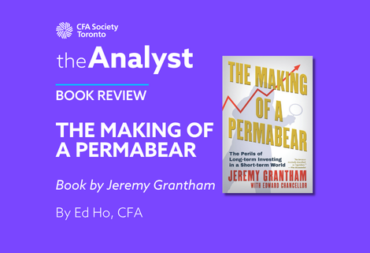 The Making of a Permabear by Jeremy Grantham Books to help you step into spring BOOKS TO BRING YOU INTO A NEW YEAR