 CFA Society Of Toronto - Home Page




Eli and the Octopus: The CEO Who Tried to Reform One of the World’s Most Notorious Corporations
Matt Garcia
Harvard University Press
April 2023, $37.95
Eli and the Octopus traces the rise and fall of an enigmatic business leader and his influence on the nascent project of corporate social responsibility. Born Menashe Elihu Blachowitz in Lublin, Poland, Eli Black arrived in New York at the age of three and became a rabbi before entering the business world. Driven by the moral tenets of his faith, he charted a new course in industries known for poor treatment of workers, partnering with labour leaders like Cesar Chavez to improve conditions. But risky investments, economic recession, and a costly wave of natural disasters led Black away from the path of reform and towards corrupt backroom dealing.
Now, two decades after Google’s embrace of “Don’t be evil” as its unofficial motto, debates about “ethical capitalism” are more heated than ever. Matt Garcia presents an unvarnished portrait of Black’s complicated legacy. Exploring the limits of corporate social responsibility on American life, Eli and the Octopus offers pointed lessons for those who hope to do good while doing business.
Empire, Incorporated: The Corporations That Built British Colonialism
Philip J. Stern
Belknap Press
May 2023, $47.95
An award-winning historian places the corporation—more than the Crown—at the heart of British colonialism, arguing that companies built and governed global empire, raising questions about public and private power that were just as troubling 400 years ago as they are today.
Across four centuries, from Ireland to India, the Americas to Africa and Australia, British colonialism was, above all, the business of corporations. Corporations conceived, promoted, financed, and governed overseas expansion, making claims to territory and peoples while ensuring that British and colonial society were invested, quite literally, in their ventures. Colonial companies were also relentlessly controversial, frequently in debt, and prone to failure. The corporation was well-suited to overseas expansion, not because it was an inevitable juggernaut, but because, like empire itself, it was an elusive contradiction: public and private; person and society; subordinate and autonomous; centralized and diffuse; immortal and precarious; national and cosmopolitan—a legal fiction with very real power.
Breaking from traditional histories in which corporations take a supporting role by doing the dirty work of sovereign states in exchange for commercial monopolies, Philip Stern argues that corporations took the lead in global expansion and administration. Whether in sixteenth-century Ireland and North America or the Falklands in the early 1980s, corporations were key players. And, as Empire, Incorporated makes clear, venture colonialism did not cease with the end of empire. Its legacies continue to raise questions about corporate power that are just as relevant today as they were 400 years ago.
Challenging conventional wisdom about where power is held on a global scale, Stern complicates the supposedly firm distinction between private enterprise and the state, offering a new history of the British Empire, as well as a new history of the corporation.
The World of Sugar: How the Sweet Stuff Transformed Our Politics, Health, and Environment Over 2,000 Years
Ulbe Bosma
Belknap Press
May 2023, $45.00
The World of Sugar provides the definitive 2,500-year history of sugar and its human costs, from its little-known origins as a luxury good in Asia to worldwide environmental devastation and the obesity pandemic.
For most of history, humans did without refined sugar. After all, it serves no necessary purpose in our diets, and extracting it from plants takes hard work and ingenuity. Granulated sugar was first produced in India around the sixth century BC, yet for almost 2,500 years afterwards, sugar remained marginal in the diets of most people. Then, suddenly, it was everywhere. How did sugar find its way into almost all the food we eat, fostering illness and ecological crisis along the way?
The World of Sugar begins with the earliest evidence of sugar production. Through the Middle Ages, traders brought small quantities of the precious white crystals to rajahs, emperors, and caliphs. But after sugar crossed the Mediterranean to Europe, where cane could not be cultivated, demand spawned a brutal quest for supply. European cravings were satisfied by enslaved labour; two-thirds of the 12.5 million Africans taken across the Atlantic were destined for sugar plantations. By the twentieth century, sugar was a major source of calories in diets across Europe and North America.
Sugar transformed life on every continent, creating and destroying whole cultures through industrialization, labour migration, and changes in diet. Sugar made fortunes, corrupted governments, and shaped the policies of technocrats. And it provoked freedom cries that rang with world-changing consequences. In Ulbe Bosma’s definitive telling, to understand sugar’s past is to glimpse the origins of our own world of corn syrup and ethanol and begin to see the threat that a not-so-simple commodity poses to our bodies, our environment, and our communities.
Deeply Responsible Business: A Global History of Values-Driven Leadership
Geoffrey Jones
Harvard University Press
March 2023, $50.00
Corporate social responsibility has entered the mainstream, but what does it take to run a successful purpose-driven business? A Harvard Business School professor examines leaders who put values alongside profits to showcase the challenges and upsides of deeply responsible business.
For decades, CEOs have been told that their only responsibility is to the bottom line. But consensus is that companies—and their leaders—must engage with their social and environmental contexts. Geoffrey Jones, the man behind one of Harvard Business School’s most popular courses, distinguishes deep responsibility, which can deliver radical social and ecological responses, from corporate social responsibility, which is often little more than window dressing.
Deeply Responsible Business offers an invaluable historical perspective, going back to the Quaker capitalism of George Cadbury and the worker solidarity of Edward Filene. Through a series of in-depth profiles of business leaders and their companies, it carries us from India to Japan and from the turmoil of the nineteenth century to the latest developments in impact investing and the B Corps. Jones profiles business leaders from around the world who combined profits with social purpose to confront inequality, inner-city blight, and ecological degradation, while navigating restrictive laws and authoritarian regimes.
He found that these leaders were motivated by bedrock values and sometimes—but not always—driven by faith. They chose to operate in socially productive fields, interacted with stakeholders with humility, and felt a duty to support their communities. While far from perfect—some combined visionary practices with vital flaws—each one showed that profit and purpose could be reconciled. Many of their businesses were highly successful—though financial success was not their only metric of achievement.
As companies seek to co-opt ethically sensitized consumers, Jones gives us a new perspective to tackle tough questions. Inspired by these passionate and pragmatic business leaders, he envisions a future in which companies and entrepreneurs can play a key role in healing our communities and protecting the natural world.
Plunder: Private Equity’s Plan to Pillage America
Brendan Ballou
PublicAffairs
June 2023, $38.00
Plunder offers an authoritative exposé of private equity: what it is, how it kills businesses and jobs, how the government helps, and how we stop it.
Private equity surrounds us. Firms like Blackstone, Carlyle, and KKR are among the largest employers in America and hold assets that rival those of small countries. Yet few understand what these firms are or how they work.
In Plunder, Brendan Ballou explains how private equity has reshaped American business by raising prices, reducing quality, cutting jobs, and shifting resources from productive to unproductive parts of the economy. Ballou vividly illustrates how many private equity firms buy up retailers, medical practices, prison services, nursing home chains, and mobile home parks, among other businesses, using little of their own money to do it and avoiding debt and liability for their actions. Forced to take on huge debts and pay extractive fees, companies purchased by private equity firms are often left bankrupt, or shells of their former selves, with consequences to communities that long depended on them.
Perhaps most startling is Ballou’s insight into how this is happening with the active support of various arms of the government. But, as Ballou reveals in an agenda for reigning in the industry, private equity can be stopped from wreaking further havoc.
Leading Through Disruption: A Changemaker’s Guide to Twenty-First Century Leadership
Andrew Liveris
HarperCollins Leadership
July 2023, $34.99
The traditional corporate leadership playbook your grandparents wrote no longer works. From one of the world’s top executives, Leading Through Disruption describes a new leadership paradigm for resilience and agility in a rapidly changing world.
In the last twenty years, the world has faced dramatic changes: climate change, economic downturns, a global pandemic, geopolitical upheaval, terrorism, and the collapse of various industries. It will now require an overhaul in order to handle these global tectonic shifts. This book is a must-read guide for aspiring leaders in various sectors who are keen on not only ensuring current success, but protecting the planet’s future for everyone.
Andrew Liveris, former Chairman and CEO of the Dow Chemical Company, presents a variety of powerful tools that will enable you to tackle any problem quickly and responsively, with an eye to creating a more equitable, sustainable future.
The End of Leadership as We Know It: What Takes It to Lead in Today’s Volatile and Complex World
Steve Garcia and Daniel Fisher
Wiley
August 2023, $33.99
Leading in times of flux isn’t about championing shiny new tactics. It’s about taking a comprehensive approach and rethinking the essence of leadership itself, especially in dealing with unpredictable situations.
Managers feel most motivated to fix what they’re doing wrong rather than incorporate new approaches for their own sake. Drawing on the latest research about adaptive leadership and complexity, the authors survey the damage caused by these lingering approaches and offer powerful strategies to help leaders truly achieve the impact they seek.
Leaders will gain a new awareness of their current approaches and the devastating blind spots they cause, and become equipped and energized to remedy them.
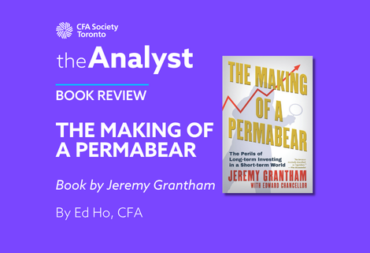 The Making of a Permabear by Jeremy Grantham Books to help you step into spring BOOKS TO BRING YOU INTO A NEW YEAR