 CFA Society Of Toronto - Home Page





Economics: An A-Z Guide 3rd edition
Matthew Bishop, The Economist,
Economist Books, June 2016, $24.50
Economics: An A-Z Guide explains the most important economic terms and concepts. Written with the clarity and wit for which The Economist is renowned, it features bite-sized overviews of essential economic ideas.
If you need to understand why a country’s balance of payments is such a big deal, whether deflation is always a bad thing, or exactly why John Maynard Keynes or Milton Friedman were so influential, then dipping into this guide will provide the answers.
Primer, glossary, dictionary, and reference, this book offers everything you always wanted to know about economics but were afraid to ask.
The Inner Lives of Markets: How People Shape Them—And They Shape Us
Ray Fisman and Tim Sullivan
PublicAffairs, June 2016, $33.99
The past 25 years have witnessed a remarkable shift in how we get the stuff we want. If you’ve ever owned a business, rented an apartment, or shopped online, you’ve had a front-row seat for this revolution-in-progress. Breakthrough companies such as Amazon and Uber have disrupted the old ways and made the economy work better—all thanks to technology.
At least that’s how the story of the modern economy is usually told. Ray Fisman and Tim Sullivan show that the revolution is bigger than tech: it’s really a story about the transformation of markets. From the auction theories that power Google’s ad sales algorithms to the models online retailers use to prevent Internet fraud, even the most high-tech modern businesses are empowered by theory first envisioned by economists.
Redesigning Work: A Blueprint for Canada’s Future Well-being and Prosperity
Graham Lowe and Frank Graves
Rotman-UTP Publishing, University of Toronto Press, September 2016, $34.95
Canada’s future prosperity is of utmost concern to citizens, industry leaders, and policy-makers. Using original public opinion research from EKOS, Redesigning Work argues that improving people’s jobs and workplaces can unlock the potential to strengthen Canada’s economy and improve the well-being of Canadians.
Graham Lowe and Frank Graves are two of Canada’s leading experts on work and public opinion. In the book, the authors provide a blueprint for the future of work in Canada by identifying practical ways to make work more motivating, rewarding, and productive. They provide fuel for employers, workers, policy-makers, HR professionals, and NGOs to combat the negative trends many Canadians associate with their future economic prospects. The book paints an optimistic picture of the future of work by addressing job stress, work/life balance, skill use, and engagement.
Competing Against Luck: The Story of Innovation and Customer Choice
Clayton M. Christensen, Taddy Hall, Karen Dillon, and David S. Duncan
HarperCollins, October 2016, $36.99
Clayton M. Christensen, the foremost authority on innovation and growth, presents a cutting-edge book that every company needs in order to improve its innovation track record.
How do companies know how to grow? How can they create products they’re sure customers want to buy? Can innovation be more than a game of hit and miss? Harvard Business School professor Clayton M. Christensen has the answers. A generation ago, Christensen revolutionized business with his ground-breaking theory of disruptive innovation. Now he goes further, offering powerful new insights.
After years of research, Christensen has come to one critical conclusion: our long-held maxim—that understanding the customer is the crux of innovation—is wrong. Customers don’t buy products or services; they “hire” them to do a job. Understanding customers does not drive innovation success, he argues; understanding customer jobs does.
Christensen contends that by understanding what causes customers to hire a product or service, any business can transform innovation from a game of chance to one in which it develops products and services customers not only want to buy but are willing to pay premium prices for.
The Euro: How a Common Currency Threatens the Future of Europe
Joseph E. Stiglitz
W.W. Norton & Company, August 2016, $38.95
In The Euro, Nobel Prize-winning economist and best-selling author Joseph E. Stiglitz dismantles the prevailing consensus around what ails Europe, demolishing the champions of austerity while offering a series of plans that can rescue the continent—and the world—from further devastation.
The euro—hailed by its architects as a lever that would bring Europe together and promote prosperity— has done the opposite. As Stiglitz persuasively argues, recent crises revealed the shortcomings of the euro. Europe’s economic stagnation and bleak outlook are a direct result of the fundamental challenges in having a diverse group of countries share a common currency. The euro was flawed at birth, with economic integration outpacing political integration. Stiglitz shows how the current structure promotes divergence rather than convergence. The question is, then, can the euro be saved?
After laying bare the European Central Bank’s misguided inflation-only mandate and explaining how eurozone policies—especially those aimed at the crisis countries—have further exposed the zone’s flawed design, Stiglitz outlines three possible ways forward: fundamental reforms in the structure of the eurozone and the policies imposed on the member countries; a well-managed end to the single-currency euro experiment; or a bold, new system dubbed the “flexible euro.”
With its lessons for globalization in a world economy ever more deeply connected, The Euro is urgent and essential reading.
Extreme Events in Finance: A Handbook of Extreme Value Theory and its Applications
François Longin
Wiley, September 2016, $180.00
Beginning with a fascinating history of extreme value theories (EVTs) and financial modelling, this book introduces the historical implications that resulted in the applications and then clearly examines the fundamental results of EVT in finance. After dealing with these theoretical results, it focuses on the EVT methods critical for data analysis. Finally, it features the practical applications and techniques and the way these can be implemented in financial markets.
This book is a valuable reference for practitioners in financial markets such as financial institutions, investment funds, corporate treasuries, financial engineers, quantitative analysts, regulators, risk managers, large-scale consultancy groups, and insurers.
The New Era of Regulatory Enforcement: A Comprehensive Guide for Raising the Bar to Manage Risk
Richard H. Girgenti and Timothy P. Hedley
McGraw-Hill, May 2016, $89.95
The outset of the 21st century has seen a relentless flow of events—from the 9/11 terrorist attack to the 2008 financial recession—that have given birth to a new regulatory and enforcement landscape. In today’s global and digital world, this increasingly complex landscape has created unprecedented challenges and risks for businesses in all industries.
The New Era of Regulatory Enforcement provides an overview of the challenges companies face in conducting business in this new environment. It discusses the government policies, strategies, and tactics driving enforcement activity and outlines the most effective approaches for preventing, detecting, and responding to the risks presented.
Authors Richard H. Girgenti and Timothy P. Hedley are two highly experienced professionals at KPMG who work daily with organizations around the globe to help them understand and manage these challenges. They draw upon their years of experience in both the private and public sectors to provide an overview of the new regulatory and enforcement landscape and a framework for compliance. Assisted by a team of subject-matter professionals, they cover a broad range of topics, including bribery and corruption, money laundering and trade sanctions, market manipulation, financial reporting, fraud, offshore tax evasion, unfair and abusive consumer finance practices, and fraud and misconduct in the healthcare and life sciences industries. Prudent and diligent organizations must take the necessary steps to preserve the hard-earned value of their companies.
The 10 Laws of Trust: Building the Bonds That Make a Business Great
Joel Peterson and David A. Kaplan
AMACOM, May 2016, $23.50
Trust is the glue that holds an organization together. It turns deflection into transparency, suspicion into empowerment, and conflict into creativity. With it, a tiny company like John Deere grew into a worldwide leader. Without it, a giant corporation like Enron toppled.
In The 10 Laws of Trust, JetBlue chairman Joel Peterson explores how a culture of trust gives companies an edge. Consider this: what does it feel like to work for a firm where leaders and colleagues trust one another? Freed from micromanagement and rivalry, every employee contributes his or her best. Risk-taking and innovation become the norm. And, as Peterson notes, “When a company has a reputation for fair dealing, its costs drop: Trust cuts the time spent second-guessing and lawyering.”
In clear, engaging prose, highlighted by compelling examples, Peterson details how to establish and maintain a culture of trust. Steps include the following: start with integrity; invest in respect; empower everyone; require accountability; keep everyone informed; embrace conflict; and forget “you” to become an effective leader. With this book in hand, you’ll be able to plant the seeds of trust—and reap the rewards of reputation, profits, and success.
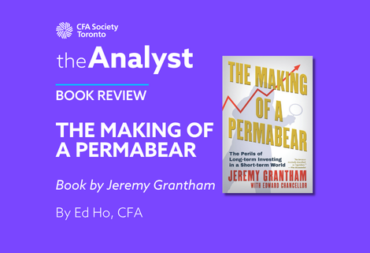 The Making of a Permabear by Jeremy Grantham Books to help you step into spring BOOKS TO BRING YOU INTO A NEW YEAR